
Introduction
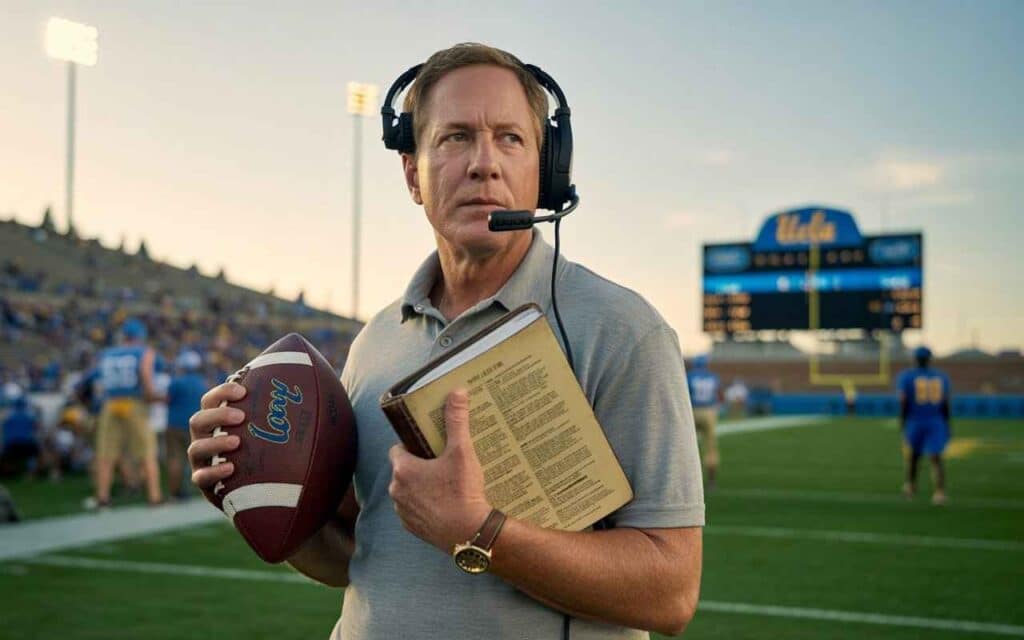
His rise began as a quarterback for the UCLA Bruins between 1980 and 1983, before joining the San Antonio Gunslingers in the USFL. By 1987, he moved through teams like the San Diego Chargers and Tampa Bay Buccaneers, adding depth to his sports biography and understanding of team dynamics. These experiences gave him firsthand insight into different NFL teams and strengthened his competitive approach. Those early seasons shaped the mindset that later defined his coaching career when he returned to his alma mater, the University of California, Los Angeles.
As a head coach, Neuheisel left his mark at the University of Colorado Boulder from 1995 to 1999, the University of Washington until 2002, and again at UCLA between 2008 and 2011, compiling a coaching record of 87–59. His later roles as assistant with the Baltimore Ravens from 2005 to 2007, working as both quarterbacks coach for two seasons and offensive coordinator for one, proved how adaptable he was throughout his coaching tenure and career timeline.
Even his time with the Arizona Hotshots in the Alliance of American Football (AAF) before the collapse of the league showed his commitment to innovation in the football league landscape. His continuous league participation across the NCAA, AAF, and USFL reflects the depth of his journey and the unique path that shaped him into one of the game’s most insightful voices.
Rick Neuheisel – Quick Overview Table
| Category | Key Information |
| Full Name | Richard Gerald Neuheisel Jr. |
| Pronunciation | ˈnuːhaɪzəl |
| Date of Birth | February 7, 1961 |
| Nationality | American |
| Player Position | Quarterback |
| College Team | UCLA Bruins (1980–1983) |
| Pro Teams (USFL) | San Antonio Gunslingers |
| Pro Teams (NFL) | San Diego Chargers, Tampa Bay Buccaneers (1987 season) |
| Coaching Roles – NCAA (Head Coach) | University of Colorado Boulder (1995–1999), University of Washington (1999–2002), UCLA (2008–2011) |
| Overall College Coaching Record | 87–59 |
| NFL Coaching Roles | Baltimore Ravens – Quarterbacks Coach (2 seasons), Offensive Coordinator (1 season), 2005–2007 |
| AAF Role | Head Coach, Arizona Hotshots |
| League Involvement | NCAA, NFL, USFL, AAF |
| Career Strengths | Leadership, quarterback development, offensive strategy, multi-league experience |
Rick Neuheisel’s Early Life Revealed: How It All Began
Growing up in Madison, Wisconsin, I’ve always pictured how a young Rick Neuheisel must have felt as the only son among four children, surrounded by sisters Nancy, Katie, and Deborah. His father, Dick, an attorney, and his mother, Jane (Jackson), shaped a warm family background that carried him from his birthplace to Tempe, Arizona, where he truly grew into the person fans later admired. When I look at athletes with rich personal histories, Neuheisel’s childhood stands out because it reflects a steady upbringing, strong values, and the early spark of a future leader in youth sports.
By the time he reached McClintock High School, he had already become the kind of student-athlete who leaves a mark. He lettered in three sports—football, basketball, and baseball—and was proudly named the school’s outstanding athlete during his senior year, right before he graduated in 1979.
As someone who’s followed many high school athletes, I can see how this level of athletic performance, early development, and natural drive shaped his youth profile and set the foundation for the remarkable journey ahead. Every detail from his education, athletic achievement, and biographical data points to a young man destined for impact, even long before the world knew his identity or career success.
Rick Neuheisel’s Playing Career Uncovered
When I look back at UCLA’s rich college football history, the rise of Rick Neuheisel always feels like one of those unforgettable career highlights that shape a program’s identity. He began as a walk-on, holding placekicks for John Lee, never expecting to become the starting quarterback by his senior year in the 1983 season.
That season opened with a tough loss to Georgia, followed by a tie against Arizona State and a rough 42–10 defeat to #1-ranked Nebraska. I remember reading how he was benched in favor of Steve Bono, but the game has a funny way of bringing you back when you’re needed most.
By October 1, after the Bruins lost to BYU and started 0–3–1, everything changed again. When Bono got injured during the Stanford game, Neuheisel came back to finish the season, leading UCLA to an eventual 6–4–1 record and a meaningful win over arch-rival USC, helped by Washington State’s upset of Washington, which gave UCLA the Pac-10 championship and sent them to the Rose Bowl on January 2, 1984.
What I’ve always loved about Neuheisel’s story is how unpredictable the road is for players. That 45–9 victory over 4th-ranked, heavily favored Illinois in the 1984 Rose Bowl—where he was named the MVP—is the kind of moment that defines team performance and personal grit. He threw two of his four touchdown passes to sophomore wide receiver Karl Dorrell from San Diego, who later became his assistant and eventually his predecessor as UCLA head coach.
Rick Neuheisel’s Legendary Rise & Records
The Bruins, once unranked, shot into the top 20 in wire service polls, marking a true rise to stardom. And the path wasn’t smooth—even suffering food poisoning just hours before the game made it unsure he would even start, but Neuheisel did, and the ending is now Rose Bowl history. His NCAA record for single-game pass completion percentage, completing 25 of 27 passes (92.6%) in a Pac-10 win over Washington, is still one of the most impressive performance metrics I’ve ever seen, even though later broken. By 1998, he was inducted into the Rose Bowl Hall of Fame, a well-earned moment in his season timeline.
Off the field, Neuheisel proved that being a student matters just as much as being an athlete. He made the Pac-10 All-Academic team, graduated in May 1984 with a B.A. in political science, and earned a 3.4 GPA—a strong example of true academic recognition. He still holds the UCLA single-season record for completion percentage, completing 185 of 267 passes (69.3%) for 2,245 yards in 1983, all while balancing classes, travel, practices, and life as a Sigma Nu fraternity member.
For me, what stands out most is how every part of Neuheisel’s story—his entities, statistical records, biographical details, and athletic milestones—fits together with the kind of authenticity that defines a real player progression journey. From rough starts to legendary finishes, nothing about his path felt easy, but everything felt earned, making his season outcomes, rivalry moments, and Pac-10 achievements a powerful part of the Bruins’ football legacy.
Rick Neuheisel’s Professional Journey
When I first learned how Neuheisel bypassed the 1984 NFL draft, it always felt like one of those bold decisions that show how unpredictable a professional career in football can be. He joined the San Antonio Gunslingers in the USFL and played the 1984 and 1985 seasons as the Gunslingers’ starter, even though he was never considered a major NFL prospect.
When he went undrafted in the NFL’s supplemental draft of USFL players, it pushed his career into a league where opportunities were often extremely brief, sometimes lasting only five weeks. I’ve always found this era interesting because the league transitions, short-term contracts, and constant uncertainty really test a player’s mindset.
In the 1987 season, Neuheisel signed with the San Diego Chargers as a replacement player during the three-game-long players’ strike, a defining moment in NFL replacement players’ history. He spent the last two weeks of that season as a backup with the Tampa Bay Buccaneers, not playing in either game, but still contributing to the team’s timelines, season details, and overall league involvement.
Even without heavy game participation, his quarterback experience, ability to navigate team movements, and steady player role showcased the kind of persistence that shapes a powerful biographical sequence in football’s performance context.
Rick Neuheisel’s Coaching Career Unveiled
Early Assistant Years Revealed
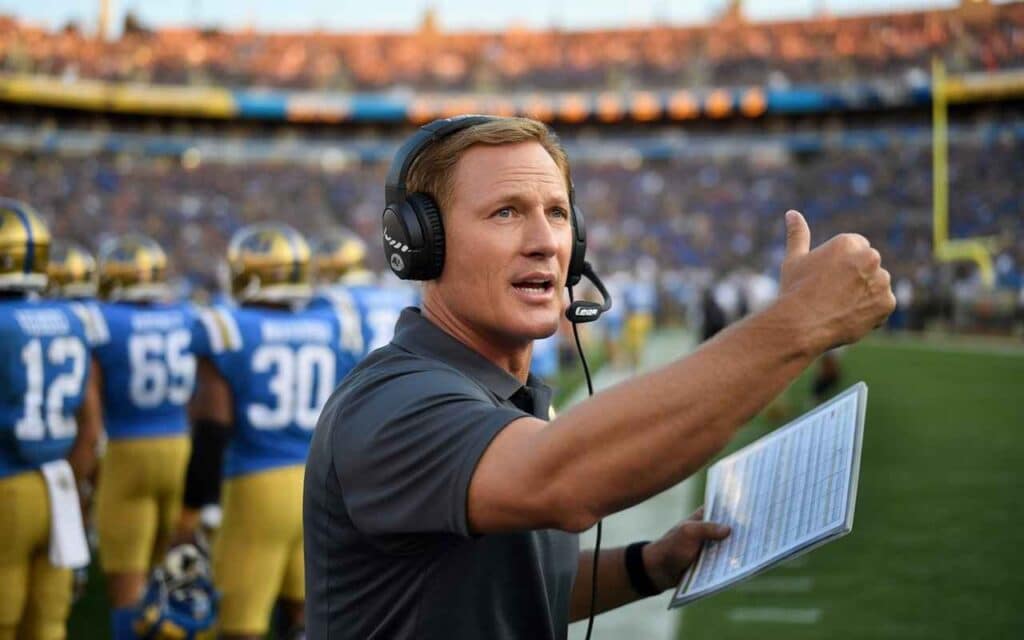
When I first learned that Neuheisel was balancing USC Law School with an NCAA postgraduate scholarship, it made his early coaching path even more impressive. He served as a graduate assistant at UCLA, where he tutored Troy Aikman—a detail that always stands out to me because it shows how natural he was at quarterback mentoring long before the nation recognized it.
He earned his Juris Doctor (J.D.) from USC in 1990 and later cleared the Arizona State Bar in May 1991, followed by the Washington, D.C. Bar shortly after. Bar in March 1993, proving he wasn’t just developing in football but also earning major professional certifications.
He later became a full-time assistant coach in 1988, and he stayed at UCLA through the 1993 season as the quarterback coach, shaping his earliest coaching roles and career progression. These years also brought tension between Neuheisel and Terry Donahue, especially in 1994. Donahue chose Texas A&M assistant Bob Toledo as the Bruins’ offensive coordinator, creating a difficult moment in their coaching relationship. In 1994, Neuheisel headed to Colorado to work as an assistant under Bill McCartney. A chance meeting with Terry Donahue at a Dallas airport in 1999 helped them resolve their past differences, bringing his early coaching journey full circle.
Rick Neuheisel’s Colorado Era (1995–1998)
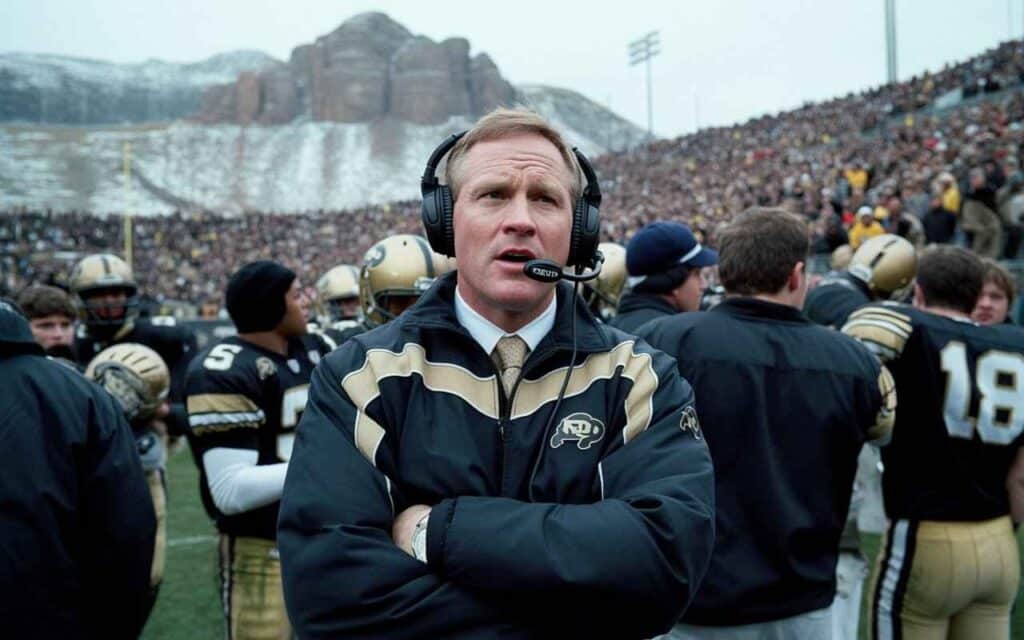
When McCartney retired following the 1994 season, Neuheisel, at age 34, was named the head coach, beginning a new chapter in his head coaching era. He spent four seasons (1995–1998) in Boulder serving as the Buffs’ head coach. His strongest year was his first, when the team finished tied for second in the final Big Eight season and captured the Cotton Bowl victory. I’ve always admired how he managed soaring national title hopes while guiding a program with big team performance history and even bigger program expectations.
His only losing season at Colorado came in 1997, despite expectations of a national title run. The team never recovered from a heavy televised loss to Michigan that derailed momentum early. After that year, the Buffs forfeited five wins because of an ineligible player, though Neuheisel was cleared of involvement.
Even with these losing season challenges, rule violations, and forfeited wins context, his coaching tenure, season results, and overall coaching outcomes still reflect a strong biographical progression shaped by resilience, setbacks, and meaningful moments in conference play and team records.
Rick Neuheisel’s Washington Era (1999–2002)
In many ways, Neuheisel carried the same steady energy from the Rose Bowl spotlight into his personal routines at home. I’ve always felt that people who are welcomed into the Hall of Fame before major milestones, like he was before the 1999 Rose Bowl, often bring that discipline into family life as well.
His connections with the University of Washington and figures like Barbara Hedges shaped his public world, but they also influenced how he handled private opportunity and personal balance. Even moments when a coach like Jim Lambright was fired or when he was named the replacement can affect the mood and rhythm at home.
By the time he left for Seattle in January 1999 to coach at the University of Washington, the shift required a grounded domestic environment that could handle change. Living through four seasons from 1999–2002, with a starting salary of $1,000,000 annually, must have created both comfort and pressure inside a household.
I imagine adjusting family routines when someone holds one of the five highest coaching salaries in the nation demands stability. Even his first acts, like choosing to restore the Huskies’ traditional gold helmets, show a personality that relies on tradition—something often mirrored in family life.
Inside Neuheisel’s Highs, Crises, and Family Resilience
During the 2000 season, when the Huskies won the Pac-10 title and the Rose Bowl, his home probably felt energized by the success. Victories over teams like Big Ten champ Purdue or tough rivalry moments with the Oregon Ducks are the kinds of highs families share together.
With leaders like Drew Brees and Marques Tuiasosopo defining the season, finishing 11–1 and ranking third in final national polls, his domestic circle would have celebrated every achievement. Being the first and, as of 2016, only former Rose Bowl MVP to coach a winning Rose Bowl team likely brought a proud, uplifting tone at home.
But domestic life often remains steady even when public storms appear, such as the 2008 Seattle Times series that accused Neuheisel and Barbara Hedges of overlooking discipline problems. Managing stress from reports involving Curtis Williams, Jeremiah Pharms, or Jerramy Stevens would require strong communication within a family.
Stories involving arrest warrants, investigations, or criminal allegations create emotional weight that loved ones feel deeply. Even when Neuheisel suspended players or dealt with situations like a truck crashing into a retirement home, the home environment becomes a space for processing and grounding.
When August 2002 arrived, and Neuheisel signed a six-year contract extension, the stability likely brought relief to everyone around him. But moments like secretly interviewing with the San Francisco 49ers in February 2003 without telling anyone at UW may have added tension beyond the workplace.
Encounters involving figures like Terry Donahue, statements issued through the athletic department, or being warned about lies would spill into personal conversations. Even sitting at San Francisco International Airport, caught in a private conversation about the 49ers’ job, is something most families would have to navigate emotionally.
Washington’s NCAA Scandal: Neuheisel’s Turning Point
The controversy began when investigators uncovered that NCAA officials believed Neuheisel had given misleading information about an unauthorized tournament pool. The issue grew when Richardson and others admitted parts of the situation had been mishandled, creating early shockwaves within Washington. I’ve always felt scandals like this show how a program can be shaken before anyone realizes the full impact. Neuheisel’s public standing became unstable as the story spread through Seattle and beyond.
Things escalated further when the infractions committee announced he had failed to follow rules regarding gambling activities. The NCAA cited concerns that he had repeatedly broken guidelines connected to off-campus basketball pools during the fall review period. His position became more concerned as officials considering a two-year show-cause order explored deeper disciplinary findings. That potential order could have effectively blacklisted him from football for two full years.
When the university learned about the severity, they gave him an ultimatum tied to possible employment termination. Neuheisel denied wrongdoing at first, but later adjusted his stance through consultation with school officers involved in the process. The school believed he had broken trust by not fully disclosing his participation in the polls. Miscommunication between compliance staff and leadership created a situation that felt deeply improper and chaotic.
Neuheisel’s Legal Battle and $4.5M Settlement
As the case moved toward the end of a major trial, more documentary evidence appeared and drastically shifted momentum. His attorneys argued the NCAA acted improperly and turned over key information late, which damaged procedural fairness. This new memo collection suggested oversight failures and major procedural errors by compliance officials. The contract dispute element only intensified as debates over accountability turned more public.
Ultimately, the lawsuit pushed both sides toward a major settlement worth $4.5 million, including loan forgiveness and additional compensation. The findings showed the NCAA had failed to comply with its own standards while questioning him. During this fallout, he spent time as a volunteer coach at Rainier Beach High School, working with School programs across the 2003–2004 seasons. Watching him rebuild after being fired on June 11 showed how one scandal can reshape a coaching employment story completely.
Rick Neuheisel’s 2005–2007 Ravens Run
When Neuheisel became an assistant coach in January 2005, he worked closely with quarterbacks in Baltimore as the NFL’s Ravens built a stronger identity. The team acquired Steve McNair in 2006, and the quarterback helped Baltimore win the AFC North division with an impressive 13–3 record that boosted overall team performance.
I’ve always admired how he was promoted to offensive coordinator after that season, stepping into a major coordinator role that showcased real offensive leadership. His rapid career advancement in the league context reflected smart coaching functions, strong positional duties, and a deep understanding of professional football strategy.
Rick Neuheisel’s UCLA Era (2008–2011)
When Rick Neuheisel returned to UCLA, it felt like the start of a new chapter filled with possibility, emotion, and enormous expectations. He stepped in after Karl Dorrell, bringing in trusted voices like Norm Chow and DeWayne Walker to rebuild the Bruins with fresh energy and a deeper sense of pride. I’ve always admired how he embraced the spotlight, appearing in media interviews like the Dan Patrick Show and igniting fans with bold lines like “Passion Bucket” and the famous “Football Monopoly in L.A. Is Officially Over” campaign.
His first big highlight came on September 1, when UCLA stunned #18 Tennessee with a 27–24 overtime win, a moment that revived confidence inside the Rose Bowl. The team faced tough setbacks right away, taking a 59–0 blow from #15 BYU and a 31–10 loss to Arizona, which made it clear the rebuilding process was far from finished. Still, Neuheisel held tight to long-term vision, even as the team finished with a 4–8 record, demonstrating how leadership sometimes means enduring uncomfortable growing seasons.
What motivated me most was how Neuheisel kept investing in the future during these tough stretches. In 2009, he pulled in a nationally ranked recruiting class, featuring players like Morrell Presley, Randall Carroll, Xavier Sua-Filo, Stan Hasiak, and Damien Thigpen, all rated highly by Scout.com. Even as attrition, injuries, and roster depth issues battered the program, he kept believing in young talent, giving true freshmen and overlooked seniors their first real chances to lead.
The challenges continued in 2010, with the Bruins finishing another 4–8 season, but Neuheisel refused to settle. He made bold staff adjustments, including parting ways with Norm Chow, declaring publicly that he would be “crushed” if UCLA failed to reach a bowl the next year. I remember that moment because it showed how deeply he cared about the Bruin identity and how determined he was to rebuild the program from the inside out.
In 2011, things finally took a turn upward as UCLA posted a 6–6 record and captured the first-ever Pac-12 South Division title. But even this success carried tension, especially after a crushing 50–0 rivalry loss to USC, a moment that still sparks debate among fans. Soon after, Neuheisel was fired, but allowed to coach the Pac-12 Championship Game, where the Bruins fell 49–31 to the Oregon Ducks—a final chapter filled with grit, respect, and unmistakable heart.
Through every win, every setback, every recruit, and every rivalry, Neuheisel’s UCLA years weren’t defined by perfection—they were defined by resilience. And in many ways, that emotional fight to rebuild the Bruins has become one of the most unforgettable stretches of his entire coaching journey.
Inside Neuheisel’s 2019 AAF Coaching Era
When Neuheisel stepped into his head coach role for the Phoenix-based Arizona Hotshots in May 2018, the energy around the planned Alliance of American Football felt fresh and full of promise. He led the team at Sun Devil Stadium in his home state, bringing strong team leadership into an ambitious inaugural season designed to reshape spring football. I’ve always felt that coaching in a new league demands a different kind of confidence, especially when every game helps define a brand-new identity.
Despite the uncertainty surrounding the AAF league, the team played hard and fought to a 5–3 record before the league suddenly folded in the middle of the season. The abrupt league collapse ended Neuheisel’s promising coaching assignment, but his ability to build momentum showed a real command of record metrics and performance outcomes under pressure. From a storytelling point of view, this chapter highlights the unpredictable nature of football’s business side, where even strong season timelines and solid team participation can be interrupted overnight.
Inside Rick Neuheisel’s Rise in Broadcasting
In December 2011, Neuheisel joined CBS Sports as a guest analyst, bringing his football insight to the Inside College Football show. By May 2012, it was announced that he was joining the Pac-12 Network, taking on studio and game analyst duties for the new season.
His momentum grew even more in March 2015, when CBS hired him for pre-game coverage on College Football Today, a key platform within the SEC broadcasting lineup. I’ve always felt his smooth shift into network television showed a natural talent for sports commentary and a strong understanding of modern football media.
Inside Rick Neuheisel’s Personal Life Story
Neuheisel and his wife, Susan (née Wilkinson), built a close family anchored by their three sons — Jerry (b. 1992), Jack (b. 1994), and Joe (b. 1997) — each connected to strong UCLA traditions. Jerry, a former quarterback at UCLA, is currently the interim offensive coordinator, while Jack, a wide receiver from Southern Methodist University, carved his own athletic path.
I’ve always admired how both Jerry and Jack graduated from Loyola High School in Los Angeles, continuing the family’s long-running academic and athletic commitment. Joe also attended UCLA, strengthening those deep college football family ties that define their shared story. Their legacy stretches even further through Rick’s father, Richard “Dick” Gerald Neuheisel Sr., an attorney and past president of Sister Cities International, and through his sister Nancy, who was a cheerleader for conference rival Arizona during Neuheisel’s years as a quarterback.
Conclusion: Rick Neuheisel’s Journey in Full Perspective
Rick Neuheisel’s story shows how determination, adaptability, and leadership can shape a remarkably dynamic football career. His journey spans playing, coaching, broadcasting, and navigating complex public challenges with steady resilience. Every chapter of his path reflects persistence, emotional growth, and an unwavering commitment to the sport he loves. Whether leading college programs, guiding NFL quarterbacks, or analyzing games on national television, Neuheisel carved a legacy built on impact rather than perfection.
From early UCLA victories to difficult controversies in Washington, he consistently found ways to rebuild and move forward. His time with the Baltimore Ravens, UCLA Bruins, and the Arizona Hotshots displayed real versatility in handling changing football environments. Even in broadcasting, he quickly earned trust by offering insights shaped by firsthand experience and deep football intelligence. When viewed as a whole, his career highlights a powerful message: success is not just about winning games but about evolving through every opportunity, setback, and turning point.
FAQs About Rick Neuheisel: Career, Life, and Legacy
1. What is Rick Neuheisel best known for in his football career?
He is best known for his versatile football journey as a UCLA quarterback, NCAA head coach, and respected broadcaster.
2. How successful was Neuheisel as a college head coach overall?
He finished his college head coaching career with an 87–59 record across multiple major NCAA programs.
3. What made his playing career at UCLA stand out so strongly?
His 1984 Rose Bowl MVP performance and record-setting accuracy cemented him as a UCLA legend forever.
4. Why was his time at the University of Washington so controversial?
His Washington tenure included NCAA investigations, disciplinary concerns, and a high-profile legal battle.
5. Did Rick Neuheisel win any major championships as a coach?
Yes, he led Washington to a Pac-10 title, a Rose Bowl victory, and an impressive 11–1 season.
6. What happened during his coaching run with the Arizona Hotshots?
He guided the team to a 5–3 record before the AAF suddenly folded mid-season.
7. How did Neuheisel transition into sports broadcasting?
He joined CBS Sports in 2011 and quickly became a trusted analyst across major football networks.
8. What roles have Neuheisel’s sons taken in football?
His sons, Jerry and Jack, both played college football and continue contributing to athletic programs.
9. What makes Neuheisel’s overall career unique compared to other coaches?
His rare mix of NCAA success, NFL coaching experience, legal challenges, and media influence sets him apart.
10. How is Rick Neuheisel viewed today within the football community?
He is widely respected as an insightful analyst, former coach, and long-standing figure in American football.
Did Rick Neuheisel play football?
Yes, Rick Neuheisel played quarterback at UCLA and later continued his career in both the USFL and NFL. His early playing experience shaped his coaching style and helped build his long-term football credibility.
Why did Rick Neuheisel leave Washington?
He was fired after participating in an NCAA betting pool, which violated strict rules against gambling on college sports. The controversy escalated quickly, placing heavy pressure on university leadership and leading to his dismissal.
How much does Rick Neuheisel make?
During his UCLA tenure, he earned up to $1.75 million per season, including bonuses and additional contractual perks. His compensation package also included a significant home loan and other performance-related benefits.